
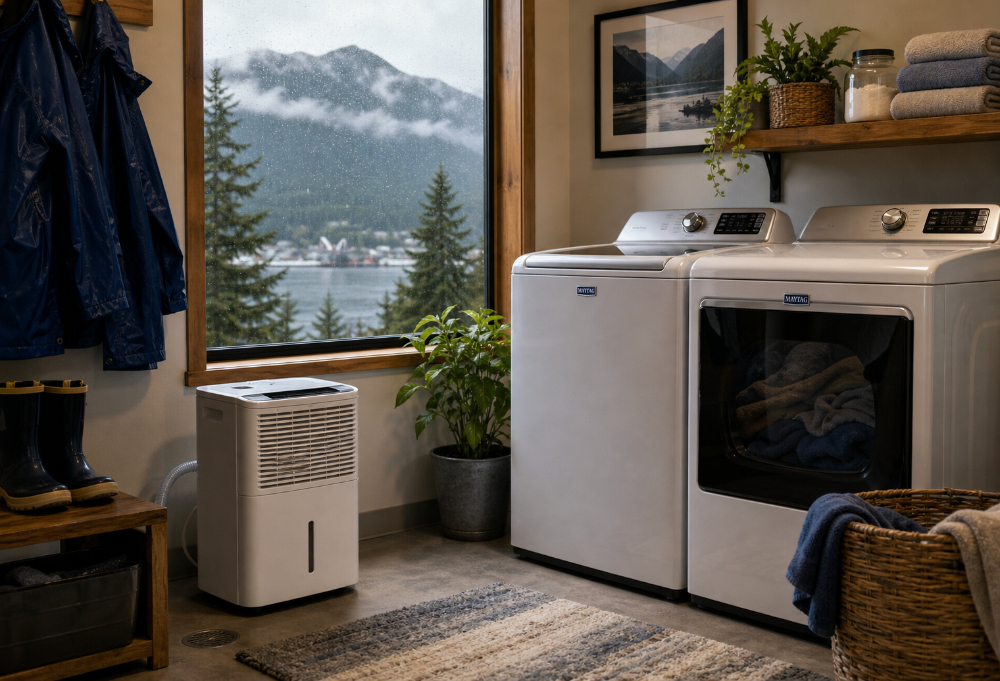
Living in Juneau means learning to live with rain, damp air, and long stretches of high humidity. While that moisture keeps Southeast Alaska lush and beautiful, it can also take a toll on dehumidifiers that work hard to keep homes, cabins, boats, garages, and workshops dry. Without regular maintenance, constant exposure to moisture can lead to rust, reduced performance, and premature equipment failure.
Quick Answer
Regular dehumidifier maintenance is one of the best ways to prevent rust and keep your unit operating efficiently in Juneau’s wet climate. Cleaning coils, checking drainage, replacing filters, and inspecting metal components for early corrosion help extend equipment life while maintaining reliable moisture control during the area’s long rainy season.
What Local Readers Should Know
-
Juneau receives significant annual rainfall, creating ideal conditions for excess indoor humidity throughout much of the year.
-
Salt air from the Gastineau Channel and nearby coastal waters can speed up corrosion on metal components.
-
Vacation cabins, boats, and seasonal properties often need extra dehumidifier attention after periods of limited use.
-
Catching surface rust early is much less expensive than replacing major internal components.
-
Routine maintenance helps dehumidifiers remove moisture more efficiently, reducing the chance of mold and mildew inside local properties.
Why This Matters Locally
Summer may feel cooler than many parts of Alaska, but Juneau’s persistent rainfall and marine climate create constant humidity challenges. Homes in the Mendenhall Valley, Downtown Juneau, Douglas Island, and the Auke Bay area often battle moisture long after the rain stops. Basements, crawl spaces, garages, marine storage buildings, and workshops are especially vulnerable.
Western Auto Marine serves Juneau residents who depend on reliable equipment in demanding coastal conditions. We understand that moisture control equipment works harder here than it does in many other climates, which makes preventative maintenance especially valuable.
Local Data or Field Observations
According to the National Weather Service, Southeast Alaska experiences frequent rainfall and consistently high humidity throughout much of the year. Those conditions mean dehumidifiers often operate for extended periods, increasing wear on fans, compressors, drainage systems, and exposed metal surfaces.
From our experience working with equipment used around the Juneau area, moisture combined with coastal air can accelerate corrosion if maintenance is postponed.
Local Impact
Excess humidity affects more than comfort. High indoor moisture can contribute to:
-
Rust on tools and stored equipment
-
Mold growth on walls and stored belongings
-
Damage to wood furniture and flooring
-
Musty odors throughout living spaces
-
Increased wear on appliances designed to remove moisture
Property owners near Lena Point, North Douglas, and areas closer to the waterfront may notice corrosion developing sooner because of the combination of humidity and marine air.
Warning Signs
Watch for these common indicators that your dehumidifier needs maintenance:
-
Rust appearing on the cabinet or metal components
-
Reduced water collection despite humid conditions
-
Louder than normal operating noise
-
Water leaking around the unit
-
Musty odors coming from the machine
-
Dirty or clogged air filters
-
Frost forming on coils when it should not
-
Longer run times without improving indoor humidity
When to Call a Professional
Minor maintenance tasks like cleaning filters, emptying collection buckets, and wiping exterior surfaces can usually be handled safely by homeowners.
Professional service is recommended when you notice:
-
Extensive rust inside the unit
-
Electrical concerns
-
Refrigerant-related problems
-
Fan motor issues
-
Compressor failure
-
Persistent leaks that continue after cleaning drainage components
Prompt attention often prevents small maintenance issues from becoming expensive repairs.
Common Local Causes
1. Constant Humidity
The extended rainy season in Juneau means many dehumidifiers run for long periods, increasing normal wear.
2. Salt Air Exposure
Properties near the waterfront may experience faster corrosion because airborne salt settles on metal surfaces.
3. Limited Airflow
Dust, pet hair, and debris can block filters and coils, forcing the unit to work harder.
4. Poor Drainage
Blocked drain hoses or overflowing collection buckets allow moisture to remain inside the unit longer than intended.
5. Seasonal Storage
Cabins, RVs, boats, and seasonal buildings left unused for months may develop corrosion if equipment is stored without proper cleaning and drying.
Prevention and Maintenance
Preventing rust starts with consistent care.
A simple maintenance routine includes:
-
Clean or replace air filters according to manufacturer recommendations.
-
Wipe exterior surfaces regularly to remove moisture.
-
Inspect coils for dirt and corrosion.
-
Keep drain hoses clear of obstructions.
-
Empty water reservoirs before long-term storage.
-
Store portable units in a clean, dry location when not in use.
-
Inspect screws, brackets, and exposed metal for early rust formation.
-
Schedule periodic inspections if the unit runs continuously throughout the rainy season.
Late spring is an excellent time for maintenance before the wet summer season places heavier demands on moisture control equipment.
Expected Results
Routine maintenance helps improve airflow, supports consistent moisture removal, reduces unnecessary wear, and can extend the useful life of the equipment. While every unit eventually reaches the end of its service life, preventative care often reduces unexpected downtime and helps maintain reliable performance during periods of heavy humidity.
Common Mistakes
Mistake: Ignoring small rust spots.
Consequence: Corrosion spreads to larger components over time.
Better Approach: Clean and treat minor corrosion before it worsens.
Mistake: Forgetting to clean filters.
Consequence: Reduced airflow forces the system to work harder.
Better Approach: Inspect filters regularly during heavy-use months.
Mistake: Storing the unit while still damp.
Consequence: Moisture trapped inside encourages corrosion and mildew.
Better Approach: Thoroughly dry the unit before seasonal storage.
Mistake: Waiting until performance drops noticeably.
Consequence: Repairs may become more extensive and costly.
Better Approach: Perform preventive maintenance before problems develop.
Common Local Scenario
A common situation in Juneau involves a homeowner returning from several weeks away during the summer to find increased humidity, musty odors, and visible rust beginning to form on a dehumidifier that has been running continuously. Early maintenance often identifies clogged filters, dirty coils, or drainage issues before more serious corrosion develops.
Related Service Solutions
Proper maintenance may include:
-
Dehumidifier inspections
-
Replacement filters and maintenance supplies
-
Corrosion prevention products
-
Equipment cleaning supplies
-
Replacement parts when needed
-
Guidance on selecting equipment suited for coastal environments
Comparing Your Options
| Option | Advantages | Considerations |
|---|---|---|
| DIY Maintenance | Lower cost and convenient for routine care | Limited to basic cleaning and inspections |
| Professional Service | Thorough inspection and diagnosis | Best for internal repairs or advanced corrosion |
| Replace Older Unit | Improved efficiency and updated features | Higher upfront investment |
| Preventive Maintenance | Helps reduce long-term wear | Requires consistent scheduling |
Service Areas
We proudly serve customers throughout Juneau, including the Mendenhall Valley, Douglas, Auke Bay, North Douglas, Lena Point, and surrounding Southeast Alaska communities. We understand the unique moisture challenges created by the region’s coastal climate.
Cost of Ignoring the Issue
Delaying maintenance can allow rust to spread, reduce efficiency, shorten equipment life, and increase the likelihood of unexpected repairs during the wettest months. Addressing small maintenance needs early often helps avoid more significant equipment problems later.
Frequently Asked Questions
How often should I maintain a dehumidifier in Juneau?
Yes. Dehumidifiers used regularly in Juneau should be inspected every few months, with filters cleaned more frequently during periods of continuous operation. The area’s persistent humidity places greater demands on moisture control equipment.
Does salt air increase rust on dehumidifiers?
Yes. Coastal environments around Juneau can expose equipment to airborne salt, which may accelerate corrosion on exposed metal surfaces if routine maintenance is neglected.
Can I remove small rust spots myself?
Yes. Light surface rust can often be cleaned using appropriate products and proper safety precautions. Extensive corrosion or internal rust should be evaluated before further damage occurs.
Why does my dehumidifier run constantly during summer in Juneau?
Continuous operation is common because frequent rainfall and naturally humid conditions require ongoing moisture removal to maintain comfortable indoor humidity levels.
Are boats and marine storage buildings more vulnerable to humidity?
Yes. Boats, docks, and marine storage facilities around Auke Bay and other waterfront locations often experience higher humidity exposure, making moisture control equipment especially valuable.
What happens if I never clean my dehumidifier filter?
A dirty filter restricts airflow, reduces efficiency, increases operating time, and places additional strain on internal components that may shorten the unit’s service life.
Should seasonal cabins in Southeast Alaska use dehumidifiers?
Many seasonal property owners use dehumidifiers to help manage moisture while buildings are occupied or during certain periods. Appropriate maintenance remains important regardless of how often the unit operates.
When is the best time to inspect my dehumidifier?
Spring and early summer are ideal times to prepare equipment before extended periods of wet weather increase humidity throughout the Juneau area.
Closing
Keeping indoor spaces dry in Juneau requires equipment that can stand up to persistent rain and coastal humidity. Regular maintenance and early rust prevention help dehumidifiers perform more reliably while protecting your home, workshop, boat, or seasonal property from excess moisture.
Protect Your Dehumidifier Before the Next Rainy Stretch
Our team understands the moisture challenges unique to Southeast Alaska and can help you find maintenance products and equipment solutions suited for local conditions.