

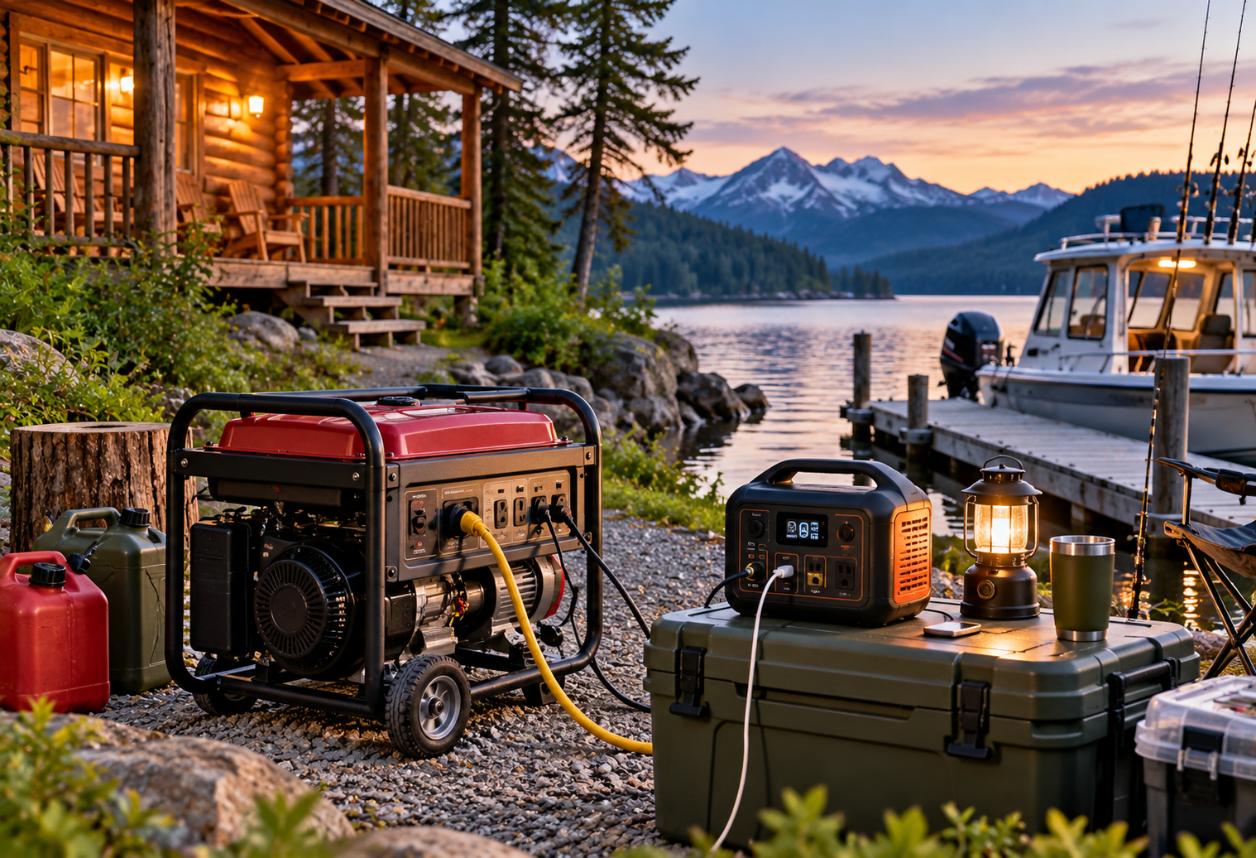
Around Juneau, reliable power can become a practical challenge once you leave the road system, head to a remote cabin, or spend extended time on the water. Wet weather, cold temperatures, limited access, and long distances from shore-based utilities make dependable backup power especially valuable in Southeast Alaska.
A generator or portable power system can keep essential equipment operating when shore power or utility electricity is unavailable. The right setup depends on what you need to run, how long you will be away, your available fuel or charging options, and whether the equipment will be used at a cabin, aboard a boat, or transported between locations.
What local cabin and boat owners should know
-
Generator capacity should be based on the equipment you actually plan to operate, including startup loads for appliances and motors.
-
Southeast Alaska’s wet climate makes proper storage, ventilation, and weather protection especially important for portable power equipment.
-
Remote locations around the Juneau area can make fuel planning and spare supplies just as important as generator capacity.
-
Portable power stations can be useful for smaller electronics and lighter loads, while generators are generally better suited to sustained or higher-demand equipment.
-
Marine and cabin applications have different safety concerns, so equipment should always be operated according to its intended use and manufacturer instructions.
Why Does Backup Power Matter Around Juneau?
Backup power matters around Juneau because cabins, boats, and remote properties may have limited or no connection to conventional electrical service, while local weather can make dependable lighting, communications, charging, and other essential electrical needs especially valuable. A carefully planned power source can make time away from the grid safer and more practical.
Juneau’s geography creates conditions that are different from those in a typical road-connected community. Gastineau Channel, Douglas Island, Auke Bay, Favorite Channel, and the surrounding Tongass National Forest put residents and visitors close to large areas where conventional utility power may not be readily available.
Rain and moisture are also everyday considerations in Southeast Alaska. Equipment that works well in a dry garage still needs appropriate protection and operating conditions when it is being transported by skiff, stored at a cabin, or used around a harbor.
Western Auto Marine serves customers in Juneau who need equipment for local automotive, marine, and outdoor applications. When helping customers consider portable power, we focus on matching the equipment to the job rather than simply choosing the largest unit available.
What Do Local Conditions Mean for Generator Use?
Local conditions mean generator owners need to plan for moisture, transportation, fuel availability, ventilation, and changing electrical demands. Around Southeast Alaska, a generator may travel by boat or spend time at a remote property, so portability and practical operating requirements can matter just as much as the unit’s rated power output.
A cabin owner may need enough power for lights, charging equipment, refrigeration, pumps, or selected appliances. A boater may have a different list of priorities based on onboard electrical systems and where portable equipment can safely be transported, stored, and operated.
Before choosing equipment, make a list of everything you expect to power. Check each device’s electrical requirements and account for equipment that draws additional power when starting. This gives you a more useful basis for comparing generator sizes than estimating from the number of outlets alone.
What Warning Signs Suggest Your Power Plan Is Not Enough?
An inadequate portable power setup usually shows itself through overloads, difficulty starting equipment, unexpectedly short runtimes, unreliable operation, or a system that cannot support essential loads together. For remote trips outside Juneau, those inconveniences can become much harder to solve once you are already away from town.
Watch for signs such as:
-
A generator repeatedly struggling when a motor or appliance starts.
-
Circuit protection tripping when multiple devices are connected.
-
Equipment that cannot be operated simultaneously as planned.
-
Fuel consumption that makes the intended runtime impractical.
-
Extension cords, adapters, or connections that are not appropriate for the load or environment.
-
Corrosion, moisture intrusion, damaged cords, or deteriorating electrical connections.
-
A generator that becomes difficult to start or runs inconsistently.
-
A battery-based power source that runs down much faster than expected.
Problems discovered at home are inconvenient. The same problems at a remote cabin or anchorage can interfere with lighting, communications, refrigeration, pumps, and other equipment you expected to have available.
When Should You Get Help Choosing Portable Power?
You should get help choosing portable power when you are uncertain about load requirements, startup wattage, safe connections, generator capacity, or whether a generator or battery-based system better matches your needs. Local guidance is particularly useful when equipment will be transported by boat or used at a remote Southeast Alaska property.
You can safely start by listing the devices you want to run and recording the power information provided on their labels or in their manuals. You can also estimate how many hours each item will need to operate.
DIY planning should stop where electrical installation, permanent wiring, transfer equipment, or other work requiring qualified expertise begins. Never improvise electrical connections or operate fuel-burning equipment in enclosed spaces.
What Common Factors Affect Portable Power Around Juneau?
The most common factors affecting portable power around Juneau are the electrical load, expected runtime, transportation method, weather exposure, and access to fuel or recharging. Cabin and marine users also need to think about how frequently the equipment will be used and whether it must be moved through docks, boats, beaches, or uneven terrain.
1. Electrical demand: A few lights and charging devices require far less capacity than pumps, power tools, refrigeration, or several appliances operating together.
2. Remote access: Trips toward outlying cabins and waterways may make a quick return to town inconvenient. Fuel, oil, charging equipment, and other necessary supplies should be planned before departure.
3. Wet conditions: Southeast Alaska’s frequent moisture means storage and operation need extra attention. Portable equipment should be kept and used according to manufacturer requirements.
4. Seasonal use: Equipment that sits unused between fishing trips or cabin visits may need inspection and maintenance before returning to service.
How Can You Maintain a Generator for Remote Use?
Generator maintenance for remote use should include regular inspections, manufacturer-recommended service, proper fuel management, and a test run before leaving Juneau. Finding a starting, fuel, battery, or connection problem before loading the boat is much easier than discovering it after reaching a cabin or remote shoreline.
Check the equipment manual for the correct maintenance schedule. Inspect cords and connections for damage, look for signs of corrosion or moisture exposure, and confirm that required supplies are available.
Before a longer trip, operate the generator under appropriate conditions and verify that the equipment you expect to use can be supported. Do not wait until an outage or remote stay to find out whether your setup works as intended.
What Results Should You Expect From a Properly Sized Power Setup?
A properly sized portable power setup should operate the intended loads within the equipment’s rated capabilities while giving you a realistic plan for runtime, fuel, charging, and transportation. It should not require unsafe workarounds or constant load juggling just to keep the most important equipment functioning.
The goal is not necessarily to power everything at once. For many cabins and boats, prioritizing essential loads creates a more practical setup. Lighting and communications may come first, followed by refrigeration, pumps, tools, or other equipment based on the trip.
What Mistakes Should Cabin and Boat Owners Avoid?
Cabin and boat owners should avoid choosing equipment based only on advertised wattage, ignoring startup loads, neglecting maintenance, and assuming fuel or charging access will be easy. In Southeast Alaska, a small planning mistake can become a larger inconvenience when the nearest replacement part or additional fuel is back in town.
Mistake: Buying without calculating expected loads.
Consequence: The generator may not handle the equipment you planned to use.
Better approach: List loads and startup requirements before selecting capacity.
Mistake: Leaving equipment untested between trips.
Consequence: A starting or maintenance issue may appear at the cabin.
Better approach: Inspect and test equipment before departure.
Mistake: Treating a generator like indoor electrical equipment.
Consequence: Unsafe operation can expose people to serious hazards.
Better approach: Follow manufacturer requirements for ventilation, weather protection, clearance, and operation.
What Is a Common Remote Cabin Power Scenario?
A common local scenario is a Juneau resident preparing for several days at a cabin accessible primarily by boat and wanting electricity for lighting, device charging, refrigeration, and occasional equipment use. The challenge is balancing enough capacity for those needs against fuel requirements, portability, storage space, and the realities of transporting equipment.
Instead of starting with a generator size, start with the load list. Determine what must operate continuously, what can run only when needed, and which devices have higher startup demands. That process makes it easier to identify a practical power solution without unnecessarily increasing equipment size and fuel needs.
Which Portable Power Solutions Make Sense?
The right portable power solution may be a conventional generator, a battery-based portable power station, or a combination chosen around the actual electrical demands of the cabin or boat. Generators are useful for sustained and higher loads, while battery systems can be convenient for quieter, lighter-duty applications where their capacity is sufficient.
We can help customers compare equipment based on intended use, portability, capacity, and the practical needs of Southeast Alaska trips.
How Do Generators and Portable Power Stations Compare?
Generators and portable power stations solve different problems, so the better choice depends on runtime, load, noise considerations, transportation, and access to fuel or recharging. A remote cabin requiring substantial power for extended periods may have different needs from a boat owner primarily charging electronics and running smaller devices.
Generators can provide sustained electricity as long as the appropriate fuel supply is available and the unit is operated safely. Battery power stations avoid fuel during operation but have finite stored energy and must eventually be recharged.
For some users, combining technologies can provide flexibility. The appropriate configuration should still be based on actual equipment requirements rather than assumptions.
Where Do We Help Customers With Portable Power Needs?
We help customers in Juneau and the surrounding Southeast Alaska area consider equipment for local cabin, marine, and portable power applications. That can include people heading out from Auke Bay, traveling around Douglas Island and Gastineau Channel, or preparing for time at remote properties beyond the local road system.
Local geography makes planning ahead part of owning dependable equipment.
What Can Happen If You Ignore Generator Problems?
Ignoring generator problems can leave you without the electrical capacity you expected when you are far from easy replacement parts, service, or utility power. Hard starting, damaged cords, corrosion, neglected maintenance, and repeated overloads are better addressed before a trip than after arriving at a remote Southeast Alaska destination.
The practical cost of waiting may include lost time, disrupted plans, spoiled refrigerated supplies, or being unable to operate equipment you expected to rely on.
FAQ
What size generator do I need for a remote cabin near Juneau?
The right generator size depends on the combined running and startup requirements of the equipment you plan to operate. Make a list of lights, refrigeration, pumps, tools, chargers, and appliances, then check their electrical requirements. Avoid choosing capacity based solely on cabin size because two similarly sized cabins can have very different power needs.
Are portable generators useful for boats around Juneau?
Portable generators may be useful in some marine situations, but safe operation and suitability must come first. Fuel-burning equipment creates hazards that require careful attention to ventilation, placement, fuel storage, electrical connections, and manufacturer instructions. Never assume equipment intended for general portable use is automatically appropriate for every onboard application.
Is a portable power station better than a generator for a Southeast Alaska cabin?
A portable power station can be a good choice for smaller electrical loads, but its usefulness depends on battery capacity and available recharging. A generator may be more practical for larger or longer-running loads. Some remote cabin owners may find that the two technologies serve different purposes rather than directly replacing each other.
Should I test my generator before leaving Juneau?
Yes, testing your generator before leaving Juneau can reveal starting, maintenance, fuel, or load problems while you still have convenient access to supplies and assistance. Follow the manufacturer’s instructions, verify normal operation, and make sure you have the correct fuel and maintenance supplies before heading to a remote cabin or launching for an extended trip.
How does Southeast Alaska weather affect portable power equipment?
Southeast Alaska’s wet conditions make moisture protection, storage, and equipment inspection especially important. Generators still require safe ventilation and must never be enclosed in a way that creates a carbon monoxide hazard. Follow the manufacturer’s requirements for operating conditions rather than improvising covers or enclosures to deal with rain.
What should I bring with a generator to a remote cabin?
Bring the supplies specified for your equipment and trip, which may include appropriate fuel, manufacturer-recommended maintenance items, suitable electrical connections, and operating instructions. The exact list depends on the generator and expected runtime. Check everything before departure because replacing a forgotten or damaged item can be difficult once you are outside the Juneau road system.
How often should a generator used seasonally be maintained?
A seasonal generator should be maintained according to the schedule specified by its manufacturer, including any requirements based on operating hours or storage periods. Before the first cabin or boating trip of the season, inspect the equipment and confirm reliable operation rather than assuming it is ready because it worked during the previous season.
Can I run a portable generator inside a cabin or enclosed boat area?
No. Fuel-burning generators should not be operated inside cabins or enclosed spaces because carbon monoxide can accumulate and cause serious injury or death. Follow the generator manufacturer’s placement and clearance instructions carefully. Marine environments require additional caution because enclosed compartments and occupied spaces can create particularly serious ventilation concerns.
Keep Reliable Power Ready for Your Next Southeast Alaska Trip
A dependable power plan can make remote cabin stays, boating trips, and time beyond the Juneau road system much easier to manage. We can help you consider generator and portable power options based on what you need to run and where you plan to use it.