

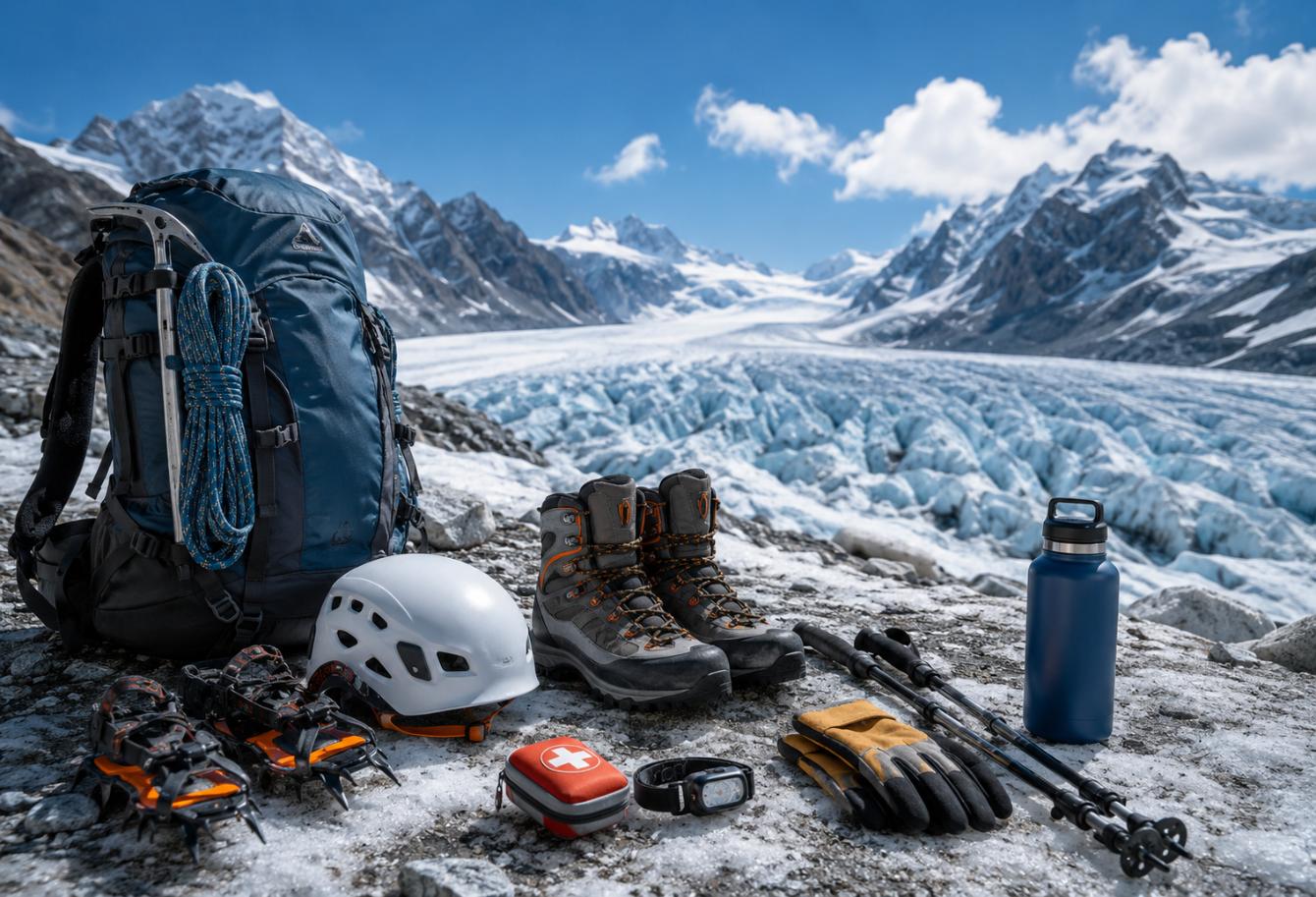
Exploring the Juneau Icefield is one of the most unforgettable outdoor experiences in Southeast Alaska. Towering glaciers, changing weather, and rugged terrain create breathtaking scenery, but they also demand careful preparation. Whether you’re joining a guided excursion or planning a more advanced backcountry adventure, carrying the right safety gear can make a significant difference.
Quick Answer
Hiking the Icefield safely requires more than sturdy boots and warm clothing. Essential professional safety gear includes crampons, an ice axe, a climbing helmet, proper layering, emergency communication devices, navigation tools, and glacier rescue equipment when traveling on glacial terrain. Juneau’s unpredictable weather, rapidly changing trail conditions, and remote landscapes make proper preparation especially important.
What Local Readers Should Know
- Glacier surfaces can change daily due to melting, snowfall, and shifting ice conditions around the Juneau Icefield.
- Weather can transition from sunshine to dense fog or heavy rain within a short period in Southeast Alaska.
- Guided glacier hikes often provide specialized equipment, but independent hikers are responsible for bringing appropriate gear.
- Areas near the Mendenhall Glacier Recreation Area and Tongass National Forest require careful planning because conditions vary throughout the season.
- Cell service is unreliable in many remote areas, making emergency communication devices an important part of any hiking plan.
Why This Matters Locally
Professional safety gear is especially important in Juneau because local conditions are unlike many other hiking destinations. The combination of glaciers, steep elevation changes, wet weather, and isolated terrain means hikers need equipment designed for cold, slippery, and unpredictable environments.
Western Auto Marine understands how quickly outdoor conditions can change across Southeast Alaska. We know that preparing for an adventure starts long before reaching the trailhead, and having dependable equipment helps outdoor enthusiasts enjoy the experience with greater confidence.
Local Field Observations
Outdoor conditions around the Juneau Icefield can vary dramatically even during the height of summer. Frequent rainfall, cool temperatures, and glacial runoff create slick rocks, muddy approaches, and unstable footing. Many experienced hikers prepare for changing conditions by packing additional layers, waterproof gear, and emergency supplies even when the forecast looks favorable.
Local Impact
Hiking without proper safety equipment can quickly turn a memorable outing into a dangerous situation. Slippery ice, hidden crevasses, reduced visibility, and rapidly changing weather increase the risk of injuries and delayed rescues. Because many glacier routes are far from immediate emergency assistance, self-sufficiency becomes an essential part of responsible outdoor recreation.
Warning Signs That You Need Better Safety Equipment
The following situations suggest it’s time to upgrade your hiking gear before heading onto the icefield:
- Your boots lack traction for icy terrain.
- You have no waterproof outer layer despite the forecast.
- Your backpack does not include emergency shelter or extra insulation.
- You rely entirely on a mobile phone for navigation.
- You have no way to communicate if cell service disappears.
- You are hiking with equipment designed only for regular trails.
- You have never practiced using glacier safety equipment before your trip.
When to Call a Professional
Professional guides should always be considered for glacier travel involving crevasses, technical climbing, or unfamiliar routes. While many hiking trails around Juneau are accessible with proper preparation, traveling directly on glacier ice introduces hazards that require specialized knowledge and rescue techniques.
Guided excursions provide experienced leadership, route selection, and safety instruction that reduce many of the risks associated with glacier travel.
Common Local Causes of Safety Challenges
1. Rapid Weather Changes
Coastal weather systems moving through the Inside Passage can create rain, wind, fog, and cooler temperatures with little warning.
2. Slippery Ice and Wet Rock
Glacial meltwater continuously reshapes hiking surfaces around the Mendenhall Glacier and surrounding areas.
3. Hidden Glacier Hazards
Snow bridges and concealed crevasses may appear stable while hiding dangerous openings beneath the surface.
4. Remote Locations
Many glacier access points within Tongass National Forest are far from immediate emergency response, making self-preparedness essential.
5. Physical Demands
Uneven terrain, elevation gain, and extended hiking distances increase fatigue, making proper footwear and trekking equipment even more valuable.
Prevention and Maintenance
Preparing your equipment before every trip helps reduce unnecessary risks.
Recommended preparation includes:
- Inspect crampons for worn straps or damaged spikes.
- Test emergency communication devices before leaving town.
- Pack waterproof clothing in dry storage bags.
- Carry extra food and water beyond your planned itinerary.
- Check current weather forecasts before departure.
- Replace damaged helmets or climbing equipment immediately.
- Practice using unfamiliar gear before entering glacier terrain.
Expected Results
Proper safety equipment cannot eliminate every risk, but it significantly improves stability, visibility, communication, and emergency preparedness. Hikers who carry appropriate gear are generally better prepared to respond to changing weather, unexpected delays, and difficult terrain.
Common Mistakes
Mistake: Wearing standard hiking shoes on glacier ice.
Consequence: Reduced traction increases the likelihood of slips and falls.
Better Approach: Use mountaineering boots compatible with crampons.
Mistake: Packing too little insulation.
Consequence: Cold temperatures and wind chill can quickly lead to discomfort or hypothermia.
Better Approach: Dress in moisture-wicking layers with waterproof outer protection.
Mistake: Depending only on a smartphone.
Consequence: Batteries drain quickly in cold weather, and coverage may disappear.
Better Approach: Carry a dedicated GPS device, map, compass, or satellite communicator.
Mistake: Ignoring changing weather.
Consequence: Visibility can deteriorate quickly, making navigation difficult.
Better Approach: Monitor forecasts and be prepared to turn back when conditions worsen.
Common Local Scenario
A group sets out on a clear summer morning near the Juneau Icefield expecting an easy day hike. By early afternoon, fog rolls in, temperatures drop, and rain creates slick footing across exposed rock. Because they packed waterproof layers, navigation equipment, and emergency supplies, they safely adjust their plans and return before conditions become hazardous.
Related Service Solutions
Having reliable outdoor equipment is just as important as choosing the right destination. Depending on your adventure, hikers may benefit from:
- Waterproof clothing and protective outerwear
- High-quality hiking boots
- Emergency lighting
- Navigation equipment
- Marine-grade dry storage for electronics and supplies
- Outdoor safety accessories designed for Alaska conditions
Comparing Your Options
| DIY Preparation | Professional Guidance |
|---|---|
| Suitable for experienced hikers on established trails. | Best for glacier travel and technical terrain. |
| Lower upfront cost. | Includes specialized knowledge and safety instruction. |
| Requires researching routes and conditions independently. | Guides monitor conditions and adjust routes accordingly. |
| You provide all safety equipment. | Many guided trips supply technical glacier gear. |
Service Areas
Western Auto Marine proudly serves outdoor enthusiasts in Juneau while supporting customers throughout Southeast Alaska, including Douglas, Auke Bay, and nearby communities. We understand the unique demands of Alaska’s outdoor environment and the importance of dependable equipment.
Cost of Ignoring the Issue
Delaying equipment upgrades or hiking without appropriate safety gear increases the chances of injuries, damaged equipment, trip interruptions, and emergency situations. Investing in dependable outdoor gear before your adventure often costs far less than dealing with preventable problems in remote wilderness areas.
Frequently Asked Questions
What safety gear is most important for hiking the Juneau Icefield?
The most important equipment includes crampons, appropriate boots, layered waterproof clothing, navigation tools, emergency communication devices, and safety equipment appropriate for glacier travel.
Do guided glacier tours in Juneau provide safety equipment?
Many guided glacier excursions provide technical equipment such as crampons and helmets. Always confirm with your guide beforehand so you know what personal gear you still need to bring.
Can weather change quickly around Juneau glaciers?
Yes. Coastal weather in Southeast Alaska changes rapidly, and hikers should prepare for rain, wind, cooler temperatures, and reduced visibility even during summer.
Is a satellite communicator necessary in Tongass National Forest?
A satellite communicator is strongly recommended for remote areas where cellular service may be unavailable, especially if hiking beyond well-traveled locations.
Are trekking poles useful on glacier approaches?
Yes. Trekking poles improve balance on uneven trails, muddy ground, and rocky terrain commonly found on approaches to glacier hiking areas around Juneau.
Where can I prepare for outdoor adventures in Juneau?
Preparing begins by selecting dependable outdoor equipment, checking current forecasts, reviewing trail conditions, and ensuring your gear is ready before leaving for the trailhead.
Closing
The Juneau Icefield offers remarkable opportunities for adventure, but it rewards hikers who prepare carefully. Carrying professional safety gear, understanding local conditions, and recognizing your experience level all contribute to a safer and more enjoyable trip through one of Alaska’s most impressive landscapes.
Prepare for Your Next Alaska Adventure with Confidence
The right equipment helps you stay safer and enjoy every mile on the trail. Contact us today to learn more about dependable outdoor gear and prepare for your next glacier adventure.