

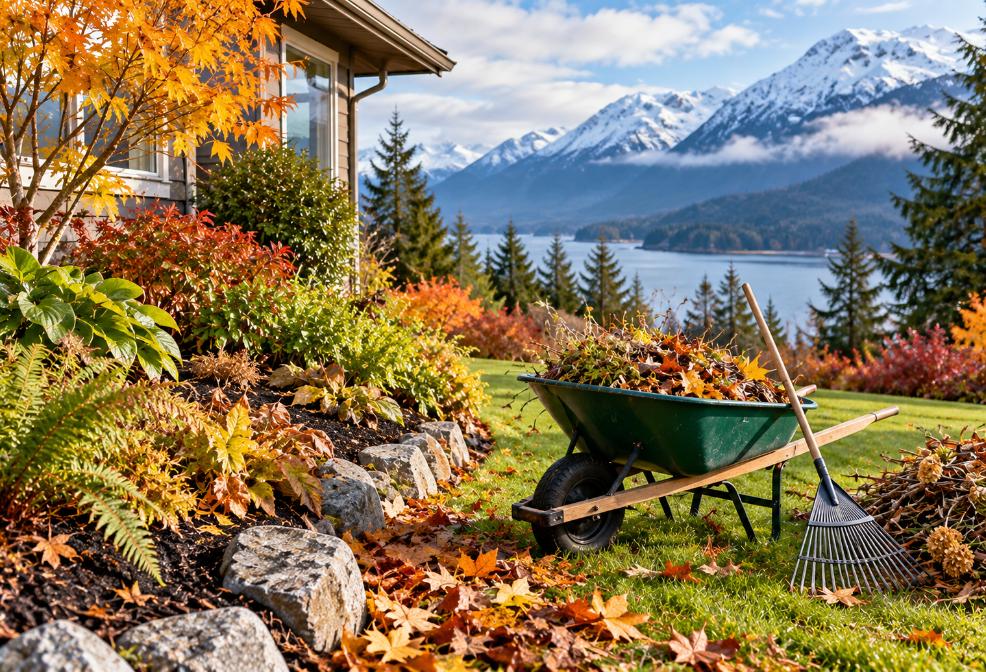
Fall yard cleanup in Juneau is less about making the lawn look tidy and more about preparing plants, soil, tools, and outdoor spaces for months of cold, moisture, wind, and limited daylight. A few well-timed tasks can reduce winter damage and give your yard a cleaner start when Southeast Alaska begins warming again.
Quick answer: A good fall lawn and garden cleanup should remove problem debris, manage the final rounds of mowing, protect vulnerable plants, clear drainage paths, put garden beds to rest, and prepare outdoor equipment for storage. In Juneau, the combination of heavy precipitation, wet ground, freezing temperatures, and winter storms makes moisture management especially important. Complete weather-sensitive work before persistent freezing conditions make it difficult.
What local homeowners should know
-
Clear thick layers of leaves and plant debris that can trap moisture against turf and create matted areas through winter.
-
Pay particular attention to drainage around yards in Juneau because prolonged wet conditions can leave already saturated ground with nowhere to shed additional water.
-
Avoid aggressive pruning simply because the growing season is ending, since not every shrub or perennial benefits from fall cutting.
-
Clean and store garden tools, hoses, and seasonal equipment before freezing conditions become routine.
-
Treat fall cleanup as preparation for Southeast Alaska weather, not simply as a cosmetic end-of-season project.
Why Does Fall Lawn and Garden Cleanup Matter in Juneau?
Fall lawn and garden cleanup matters in Juneau because yards enter winter facing persistent moisture, cold temperatures, wind, and periods of freezing weather. Preparing the property before those conditions settle in can limit trapped debris, drainage problems, damaged equipment, and unnecessary stress on plants.
Southeast Alaska presents a different fall maintenance challenge than a dry or consistently frozen climate. Rain can keep lawns and garden beds saturated well into the shoulder season. Low spots may remain soggy, fallen leaves can form dense wet mats, and clogged drainage areas can become more noticeable during periods of heavy precipitation.
Conditions can also vary across the Juneau area. Properties near Gastineau Channel, Douglas Island, Mendenhall Valley, Lemon Creek, and Auke Bay can differ in exposure, drainage, shade, and wind. That is why the best cleanup checklist starts with the actual conditions in your yard.
Western Auto Marine helps local residents find the lawn, garden, outdoor power equipment, and seasonal supplies they need for property maintenance. As fall progresses, we recommend planning cleanup around weather windows rather than waiting for one final weekend at the end of the season.
What Does Local Weather Tell Us About Fall Yard Preparation?
Local weather patterns show why moisture control should be a major part of fall yard preparation in Southeast Alaska. Juneau’s cool, wet climate means homeowners should pay attention to standing water, clogged drainage routes, wet leaf buildup, and equipment that needs time to dry before winter storage.
Instead of relying on a single calendar date, watch the conditions on your property. A lawn that remains saturated should not be repeatedly crossed with heavy equipment simply to finish a checklist. Likewise, wet leaves should not be allowed to build into a thick layer over turf just because more leaves are expected.
A practical local approach is to work in stages. Use dry or relatively calm weather windows for mowing, debris removal, pruning appropriate plants, cleaning beds, and preparing equipment.
What Warning Signs Mean Your Yard Needs Attention Before Winter?
The clearest warning signs are trapped moisture, heavy debris, drainage problems, neglected vegetation, and outdoor equipment that has not been prepared for storage. Finding these issues before sustained winter weather arrives gives homeowners more opportunity to handle them safely.
Watch for:
-
Thick, wet leaves covering large areas of turf.
-
Standing water or persistently soggy low spots.
-
Leaves and debris blocking drainage paths.
-
Dead annual plants collapsing into garden beds.
-
Broken or damaged branches that could become a problem during winter weather.
-
Garden hoses or watering equipment still exposed to freezing temperatures.
-
Mud, grass, and plant material left packed onto lawn and garden equipment.
-
Tools being stored wet, dirty, or outdoors.
When Should You Bring in Professional Help?
Professional help makes sense when fall cleanup involves hazardous trees, difficult drainage problems, steep terrain, or work beyond the homeowner’s equipment and experience. Routine raking, cleanup, equipment care, and simple garden preparation can often be handled safely by homeowners.
Juneau properties can include slopes, wooded edges, wet ground, and storm-exposed areas. Those conditions can turn an ordinary task into something more complicated. Large damaged limbs, unstable trees, substantial erosion, or persistent water movement toward structures deserve more than a quick DIY fix.
Homeowners should also stop when a job requires equipment they do not know how to operate safely. The goal is to prepare the property for winter, not to squeeze every possible project into the final weeks of fall.
What Are the Most Common Fall Yard Problems in Southeast Alaska?
The most common fall yard problems in Southeast Alaska involve excess moisture, leaf buildup, poor drainage, overgrown vegetation, and equipment left unprepared for winter. These issues often overlap because wet conditions can make debris heavier, lawns softer, and outdoor maintenance harder to complete.
1. Wet leaf accumulation: Fallen leaves can mat together on damp turf. Regular removal is usually easier than tackling one heavy layer late in the season.
2. Saturated ground: Repeated traffic over very wet soil can leave ruts and compact soft areas. Wait for better conditions when possible.
3. Blocked drainage: Leaves, needles, and garden debris can obstruct the paths water normally follows across a property.
4. Late-season overgrowth: Dead annuals and spent vegetation can leave beds cluttered, but avoid assuming every perennial or shrub should be cut back aggressively.
5. Neglected equipment: Mowers, trimmers, hand tools, hoses, and other seasonal equipment need attention before being stored for months.
What Should Be on Your Juneau Fall Yard Cleanup Checklist?
A Juneau fall cleanup checklist should prioritize leaves, lawn care, garden beds, drainage, vulnerable plants, tools, and outdoor equipment. Completing these tasks in manageable stages makes it easier to work around Southeast Alaska’s changing fall weather.
Start by removing heavy leaf buildup from the lawn and clearing debris from areas where water needs to move freely. Continue mowing while grass growth and conditions justify it, but avoid mowing saturated turf merely to complete a final cut.
Remove spent annuals and obviously diseased or damaged plant material from beds. Decide which healthy perennial growth should remain rather than automatically cutting everything to ground level.
Check containers and vulnerable plants before hard freezes become common. Empty, move, or protect items that could be damaged by freezing water.
Finally, clean hand tools and outdoor power equipment. Remove accumulated grass and soil, allow equipment to dry, and follow the manufacturer’s storage instructions for each machine.
What Results Can You Expect From a Thorough Fall Cleanup?
A thorough fall cleanup should leave your property better prepared to handle winter moisture and make spring maintenance more manageable. It cannot prevent every weather-related problem, but it can remove avoidable issues before cold conditions limit your options.
The lawn should enter winter without a heavy blanket of wet leaves. Garden beds should be free of unwanted seasonal debris while retaining appropriate plant material. Drainage routes should be visible and unobstructed, and seasonal tools and equipment should be clean and properly stored.
For local homeowners, that preparation can also make the first spring work session much easier.
What Fall Cleanup Mistakes Should Juneau Homeowners Avoid?
The biggest fall cleanup mistakes are waiting too long, working saturated ground, removing healthy plant material unnecessarily, ignoring drainage, and storing dirty equipment. A better approach is to spread the work across several suitable weather windows.
Mistake: Waiting for every leaf to fall before starting.
Consequence: Wet leaves can accumulate into dense, heavy layers.
Better approach: Remove significant buildup periodically.
Mistake: Driving or repeatedly walking over saturated lawn areas.
Consequence: Soft ground can become rutted or compacted.
Better approach: Let conditions improve before using heavier equipment.
Mistake: Cutting every garden plant down automatically.
Consequence: Plants with different maintenance needs all receive the same treatment.
Better approach: Identify plants before deciding what should be pruned or left standing.
Mistake: Putting equipment away covered in wet grass and soil.
Consequence: Moisture and debris remain on the equipment during storage.
Better approach: Clean, dry, inspect, and store equipment according to its manufacturer instructions.
What Does a Typical Local Fall Cleanup Look Like?
A common local scenario is a yard that appears manageable until several wet fall weather systems turn scattered leaves and garden debris into a much heavier cleanup job. Low areas become softer, leaves collect around drainage paths, and the remaining outdoor work becomes harder to schedule.
For a homeowner in Mendenhall Valley, Douglas, or another part of the Juneau area, the practical solution is usually staged cleanup. Remove major leaf accumulation, clear drainage areas, handle garden beds selectively, and prepare equipment whenever weather and ground conditions cooperate.
That approach is more realistic for Southeast Alaska than relying on a single perfect cleanup day.
What Lawn and Garden Supplies Can Help With Fall Cleanup?
The right lawn and garden supplies can make fall cleanup faster, safer, and better suited to the size and terrain of your property. The useful setup may include basic hand tools, debris-handling equipment, outdoor power equipment, protective gear, and storage or maintenance supplies.
At Western Auto Marine, we can help local customers explore equipment and supplies suited to their fall property-maintenance needs without assuming every yard requires the same solution.
Should You Do Fall Cleanup Yourself or Hire Help?
DIY cleanup works well for routine leaves, mowing, garden-bed maintenance, and equipment preparation, while professional service is the better choice for hazardous or specialized work. The decision should be based on the property’s terrain, the task involved, and whether you can complete it safely with appropriate equipment.
A small, relatively level yard may require little more than several organized cleanup sessions. A wooded property with steep terrain, large branches, erosion, or drainage problems can present a very different workload.
Equipment can improve efficiency, but it does not replace safe judgment or professional expertise when the work exceeds normal property maintenance.
Which Areas Around Juneau Need Fall Yard Preparation?
Fall yard preparation is useful throughout Juneau and nearby communities because Southeast Alaska’s wet, cold shoulder season affects lawns, gardens, tools, and outdoor equipment across the region. Property-specific needs can vary in Mendenhall Valley, Lemon Creek, Auke Bay, downtown Juneau, Douglas, and other nearby areas.
Exposure, shade, slope, vegetation, and drainage should determine the exact checklist for each property.
What Can Happen If You Skip Fall Yard Cleanup?
Skipping fall cleanup can leave homeowners dealing with matted debris, blocked water flow, neglected equipment, and more work when the growing season returns. In a wet Southeast Alaska climate, small maintenance issues can also become much harder to address once freezing conditions and winter weather arrive.
You do not need a perfectly manicured yard before winter. Focus instead on the tasks that protect turf, plants, drainage, equipment, and outdoor spaces.
FAQ
When should I start fall yard cleanup in Juneau?
Start fall yard cleanup while conditions are still workable rather than waiting for a single final cleanup date. Remove leaves and debris in stages, complete weather-sensitive garden work as plants finish their season, and prepare equipment before sustained freezing conditions. Southeast Alaska weather makes flexible timing more practical than relying on the calendar alone.
Should I remove all leaves from my lawn before winter in Juneau?
Remove heavy or matted leaf buildup that covers the lawn, especially where persistent moisture keeps debris wet. A thick layer can remain pressed against turf for extended periods. Because fall conditions around Juneau are often damp, periodic cleanup is usually easier than waiting until a large volume of wet leaves accumulates.
Should I mow my lawn one last time before a Southeast Alaska winter?
Continue mowing while the grass is actively growing and ground conditions allow you to mow without damaging soft turf. There is no benefit in forcing a final mowing session across saturated ground. Follow your mower manufacturer’s operating guidance and base the timing on actual lawn growth and conditions.
Should I cut back every perennial in my Juneau garden?
No, not every perennial should automatically be cut back in fall. Different plants have different pruning and overwintering needs, and some standing growth may be intentionally retained. Identify the plants in your garden first, remove clearly unwanted or diseased material appropriately, and use plant-specific guidance before doing extensive cutting.
Why is drainage part of fall yard cleanup in Juneau?
Drainage matters because Southeast Alaska receives substantial precipitation and local properties can remain wet for long periods. Leaves and other debris may obstruct normal water movement around a yard. During cleanup, inspect obvious drainage paths and low areas, and seek qualified help when water movement threatens structures or involves significant erosion.
How should I prepare lawn equipment for winter storage?
Clean, dry, inspect, and store lawn equipment according to the manufacturer’s instructions for that specific machine. Remove grass, mud, and plant debris before storage. Equipment requirements vary by model and power source, so consult the owner’s manual rather than using one universal storage procedure for every mower, trimmer, or outdoor machine.
Is fall cleanup different on Douglas Island or in Auke Bay?
The basic priorities are similar, but individual properties can have different exposure, vegetation, slopes, drainage, and wind conditions. A sheltered yard may not behave like a more exposed property near the water. Use the same core checklist while adjusting the timing and workload to the conditions you actually see.
What fall cleanup tasks should I avoid doing myself?
Avoid DIY work involving hazardous trees, large unstable branches, dangerous slopes, major drainage problems, or equipment you cannot operate safely. Routine lawn and garden cleanup is manageable for many homeowners, but Southeast Alaska terrain and wet conditions can increase risk. Bring in an appropriate professional when a task exceeds normal property maintenance.
Protect Your Yard Before Southeast Alaska Winter Arrives
A successful fall cleanup is not about making every corner of the property spotless. It is about helping your lawn, garden, drainage areas, tools, and equipment enter a Juneau winter in better condition.
Western Auto Marine is here to help local homeowners find practical lawn and garden equipment and supplies for seasonal property maintenance.