

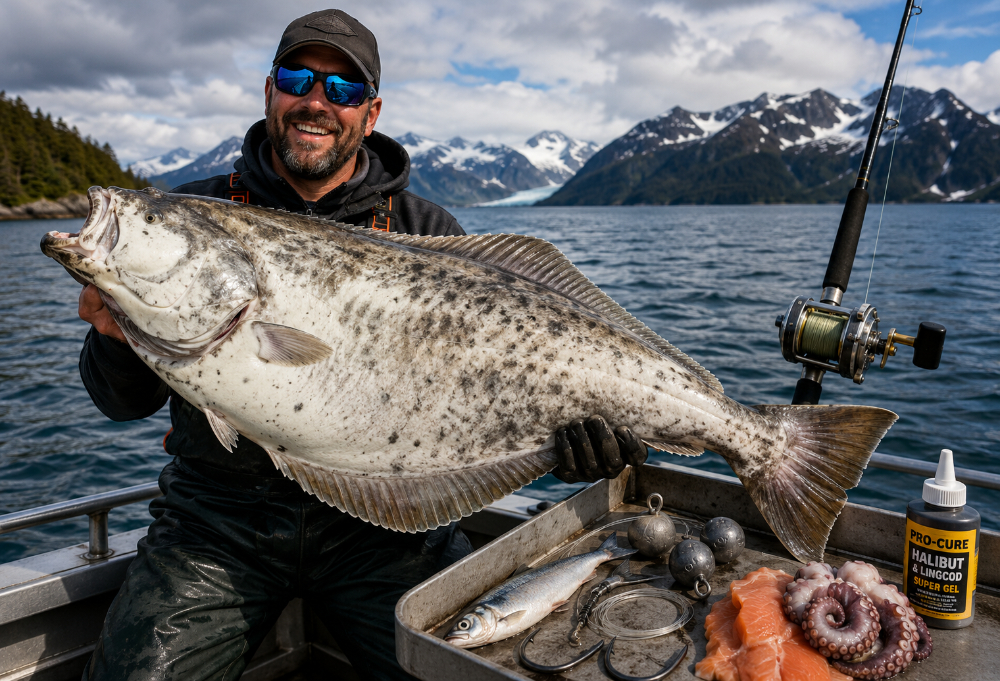
Few destinations in Alaska combine accessibility and raw fishing potential the way Juneau does. Tucked between the Gastineau Channel and the sprawling waters of Stephens Passage, Juneau sits directly above some of the most productive halibut grounds in the entire Pacific Northwest. Every summer, as water temperatures rise slightly and baitfish populations explode, Pacific halibut push into shallower feeding zones and create one of the most exciting bottom-fishing opportunities on the planet.
The peak summer run typically kicks off in late June and runs strong through August. During this window, fish averaging 30 to 80 pounds are common, and true barn-door halibut exceeding 200 pounds are a genuine possibility on any given drift. What separates anglers who consistently boat fish from those who go home empty is not luck; it is rigging. Juneau’s deep water and notoriously heavy tidal currents demand a specific approach, and getting that approach dialed in before you leave the dock will make all the difference.
Understanding the local environment is the first step. The waters around Juneau, including the passages near Douglas Island and the drop-offs beyond Auke Bay, routinely reach depths of 300 to 600 feet in prime halibut territory. Tidal swings of 15 to 18 feet generate currents powerful enough to sweep a poorly weighted rig completely off the bottom. Halibut fishing in these conditions is not the same game you play in shallower, calmer waters. You need heavier gear, smarter terminal tackle, and a clear understanding of how current affects your presentation.
Choosing the Right Rod, Reel, and Line for Deep Alaskan Water
Before you ever tie a hook, your rod-and-reel combo needs to be built for the environment. Halibut fishing in Juneau is a heavy-duty pursuit. Most experienced local anglers fish with heavy-action rods in the 6.5 to 7.5-foot range, paired with a high-capacity conventional reel that holds at least 400 yards of line. When you are dropping baits into 400 feet of water and fighting a fish that wants to go deeper, running out of line is not an option.
Braided line is the clear choice for this fishery. In heavy current, the thin diameter of 80 to 100-pound braid cuts through the water column far more efficiently than monofilament, allowing your weight to reach the bottom faster and stay there. Many anglers use a topshot of 60 to 80-pound monofilament or fluorocarbon as a shock leader, connecting it to the braid with a sturdy swivel. This setup gives you the sensitivity of braid with enough stretch near the hook end to absorb the violent head-shaking that big halibut are known for.
Do not underestimate your sinker weight. In moderate current, a 16-ounce cannonball sinker might hold bottom adequately. During peak tidal flow, however, you may need to step up to 24 or even 32 ounces to keep your bait where the fish are. If your weight is bouncing or dragging instead of sitting firmly on the bottom, you are not fishing; you are drifting bait through the water column and missing your target zone entirely.
Terminal Tackle and the Case for Circle Hooks
When it comes to the business end of your halibut rig, circle hooks have become the standard in Juneau and across Alaska for good reason. Circle hooks dramatically improve hook-up rates on halibut because of the way the fish tend to eat. Halibut often pick up bait, hold it briefly, and then move off. A circle hook will roll into the corner of the fish’s mouth as the line comes tight, creating a secure connection without requiring a hard hook-set. With a J-hook, missed strikes are far more common, especially when fishing in deep water where line stretch can absorb the energy of a traditional sweep set.
For most Juneau halibut fishing, circle hooks in the 16/0 to 20/0 range work well with whole herring, octopus, or large chunks of salmon belly. The leader connecting your hook to your swivel should be 80 to 100-pound fluorocarbon, cut to a length of 18 to 36 inches depending on current conditions. Shorter leaders work better in heavy current because they keep the bait closer to the sinker and reduce the chance of your presentation spinning or tangling. Adding a Cheater hook, which is a second hook tied a few inches above the first, increases your bait coverage and improves hookup percentages on larger offerings like whole salmon heads.
Some anglers fishing out of Juneau also experiment with flashers and hoochies as a dropper above their main bait rig. While flashers and hoochies are traditionally associated with salmon downrigger setups, a smaller flasher combined with a bright hoochie can add visual attraction in the murky bottom water common in Southeast Alaska. This is not a standard approach for every charter or sport boat, but it is worth having in your box for days when bites are slow and you want to give the fish something extra to look at.
Reading Current and Timing Your Drift
Tide charts are not optional equipment for halibut fishing in Juneau. They are as important as your tackle box. Halibut are most active and easiest to target during the transitions between high and low tide, particularly the period roughly 90 minutes before and after each slack tide. During peak current, fish often hunker down tight to the bottom structure and become less willing to chase bait aggressively. As the current slows toward slack, they spread out and feed more freely.
Planning your fishing around these windows requires some discipline, especially if you are on a guided charter with a set itinerary. If you have flexibility, try to position yourself on a productive piece of bottom during the incoming tide and then ride the drift through the slack period. Areas like the underwater ridges and sandy flats between Juneau and Admiralty Island consistently hold fish throughout the summer because they funnel baitfish and give halibut a natural ambush point.
Drift speed matters too. Ideally, your boat should be moving just fast enough to keep your bait ticking along the bottom rather than sitting stationary. A slow, controlled drift with your weight making occasional contact with the substrate is the presentation that triggers the most strikes. If you are moving too fast, your bait lifts off the bottom and enters the water column, where halibut rarely feed during daylight hours.
Bait Selection and Scent Strategy
Alaska’s halibut have seen a lot of bait, particularly in waters as heavily fished as those around Juneau. Presentation quality matters more than most anglers realize. Fresh herring is the gold standard, but it must be rigged properly to avoid spinning. A spinning bait creates line twist that kills your presentation and drives fish away. Thread your herring so that it lays flat and straight on the hook, with no curves or kinks in the body.
Octopus is arguably the most durable and consistently effective bait option for Juneau halibut fishing. Its tough texture stays on the hook through multiple bites and does not wash out in heavy current the way softer baits can. Salmon belly strips cut from the previous day’s catch add a powerful scent trail and work especially well during low-visibility conditions.
Adding scent attractants like Pro-Cure Halibut and Lingcod formula or a bait oil designed for bottom fish can give your presentation an extra edge. Apply it generously before the drop and reapply every 20 to 30 minutes as the bait soaks and loses its potency at depth.
The Bottom Line on Juneau Summer Halibut
Juneau’s peak summer halibut run rewards anglers who prepare with the same seriousness they bring to any big-game pursuit. Matching your gear to the deep water and heavy current, committing to circle hooks, reading the tides, and presenting quality bait with care will put you in a position to connect with some of the largest flatfish in Alaska. The fish are there. The only question is whether your rig is ready for them.
Need a Trusted Auto, Marine, Hardware, & Outdoor Supply Store Near You?
As a locally owned business serving Juneau since 1976, we take pride in offering a level of personal care and attention you simply will not find anywhere else. When you shop with us, you are not just another customer, you are part of our community, and we are committed to delivering quality products and friendly, knowledgeable service every time you walk through our doors. From automotive parts and marine hardware to appliances, outdoor gear, and everyday essentials, we have thoughtfully built our selection to meet your needs at a better value. Let us show you the difference a dedicated local team can make, reach out to us today and experience service that puts you first.