

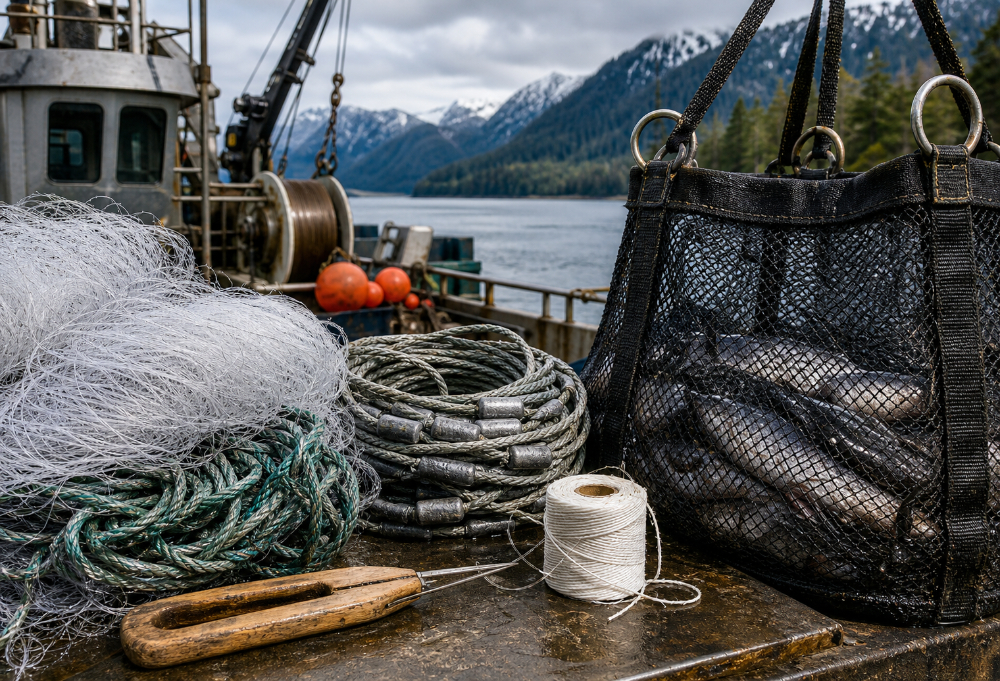
Commercial fishing in Southeast Alaska is not for the faint of heart. The waters between Ketchikan and Yakutat are some of the most productive and punishing on the planet. Salmon runs draw gillnetters and seiners into tight channels, rocky passes, and tide-swept bays where gear takes a beating every single day. For the fishermen who work these waters season after season, the ability to maintain and repair their equipment is not just a useful skill; it is the foundation of a profitable operation.
In Juneau and the surrounding communities, savvy commercial operators know that the margin between a good season and a break-even year often comes down to how well they manage their gear. Commercial fishing supplies are the lifeblood of any working boat, and having the right tools on hand before the season opens is what separates the prepared from the panicked.
The Backbone of Your Gear: Gillnet Web
The gillnet web is the central piece of technology in any driftnet or setnet fishery. It is a deceptively simple tool, a curtain of monofilament or multifilament netting suspended between the surface and a certain depth, designed to intercept salmon as they migrate through coastal waters. However, “simple” does not mean “indestructible.”
Gillnet web takes constant punishment from rocks, snags, marine debris, and the sheer weight and thrashing of fish in the mesh. A torn panel left unrepaired will only grow larger with each subsequent set. Skilled fishermen treat web repair as a daily ritual rather than an occasional chore. Keeping a well-organized mending needle stocked with the right twine, and knowing how to work a clean, tight repair knot, is a skill passed down on the docks and in the holds of boats across Southeast Alaska.
Choosing the right web spec for the target fishery matters enormously. Mesh size, material strength, and hanging ratio all influence how effectively the net fishes and how long it holds up under pressure. Operators running sockeye gear in a tight slough face different demands than those fishing coho in an open bay, and the web selection should reflect that reality. Purchasing quality gillnet web from a reputable commercial fishing supply house in Juneau ensures you are starting the season with material that meets the demands of local conditions.
The Foundation Beneath the Surface: Leadline and Its Critical Role
If gillnet web is the body of the net, then leadline is its anchor to the fishing world. Leadline runs along the bottom edge of a gillnet, weighting the mesh downward so that the net hangs vertically in the water column. Without a properly rigged and maintained leadline, even the finest web is little more than an expensive tangle waiting to happen.
Leadline is constructed with lead weights or lead-core rope woven or crimped into a line, and it must be matched carefully to the depth and current conditions where the net will fish. Too light, and the net billows up and misses fish. Too heavy, and it drags the web to the bottom, fouling on structure and increasing wear.
One often-overlooked aspect of leadline maintenance is checking the connection points where the leadline meets the web. These junction areas take significant stress during the set and the haul, and a failure here can mean losing a panel or worse. Southeast Alaska fishermen working strong tidal currents, like those found throughout the Inside Passage and around major river mouths, need to inspect their leadline connections regularly and replace worn sections before they become a liability on the water.
Hanging It Right: The Importance of Hanging Twine
Hanging twine is the thread that ties everything together, quite literally. This twine is used to attach the gillnet web to the corkline above and the leadline below, and it plays a defining role in how the finished net performs in the water. The hanging ratio, which describes how much web is attached to a given length of line, determines the angle at which the mesh hangs and directly affects the net’s ability to capture fish cleanly.
Experienced net hangers in Southeast Alaska treat hanging twine selection with the same care they give to choosing web or lead. The twine must be strong enough to hold the tension created by tidal forces and the weight of a full net, yet flexible enough to allow the web to set correctly without distorting the mesh geometry. Using the wrong twine, or hanging the net at an incorrect ratio, can render even premium web far less effective.
For commercial fishermen in the Juneau area, sourcing quality hanging twine locally means building relationships with supply houses that understand the specific demands of Southeast Alaska fisheries. These are not generic needs that can be filled with whatever arrives in a catalog. They are precise requirements shaped by decades of experience on local water.
Managing the Catch: Brailer Bags and Fish Handling Efficiency
All the work of rigging, maintaining, and fishing comes down to a single moment: getting the fish from the net to the hold quickly and cleanly. This is where brailer bags earn their place on every serious commercial vessel in Southeast Alaska.
A brailer bag is a large mesh bag used to transfer fish from the net or the hold of a tender to a processing facility or a waiting vessel. On a busy seine or gillnet operation, the brailer is in constant use, and its condition directly impacts the speed and efficiency of the delivery. A torn or weakened brailer bag on a heavy lift can result in lost fish, a delayed delivery, and a dangerous situation on deck.
Commercial fishermen running high-volume operations near Juneau and in the broader Southeast Alaska region know that cutting corners on brailer bag quality is a false economy. A well-constructed bag, made from durable mesh with reinforced attachment points, will outlast multiple seasons of hard use if cared for properly. Regular inspection of the mesh panels and the lifting rings or attachment hardware should be part of any pre-season checklist. When a bag does show wear, repair it promptly or replace it before it fails under load.
Brailer bags also come in different mesh sizes and load ratings depending on the species and volume being handled. An operation targeting pink salmon in high volume has different needs than one selectively handling large king salmon, and matching the bag to the job is a mark of a professional operation.
Conclusion
Southeast Alaska’s commercial fishing fleet operates in one of the most challenging environments on earth, and the gear that keeps it running deserves serious attention. From the gillnet web stretched across a tidal channel to the leadline holding it in position, from the hanging twine that sets the mesh at just the right angle to the brailer bags that close out each delivery, every component has a job to do. Commercial fishing supplies sourced from knowledgeable suppliers in Juneau connect local operators with the materials they need to fish hard, mend fast, and come back ready for the next set. The art of the mend is not glamorous work, but it is the work that makes everything else possible.
Need a Trusted Auto, Marine, Hardware, & Outdoor Supply Store Near You?
As a locally owned business serving Juneau since 1976, we take pride in offering a level of personal care and attention you simply will not find anywhere else. When you shop with us, you are not just another customer, you are part of our community, and we are committed to delivering quality products and friendly, knowledgeable service every time you walk through our doors. From automotive parts and marine hardware to appliances, outdoor gear, and everyday essentials, we have thoughtfully built our selection to meet your needs at a better value. Let us show you the difference a dedicated local team can make, reach out to us today and experience service that puts you first.